
Why Is the Upstairs of My House Hotter Than Downstairs?
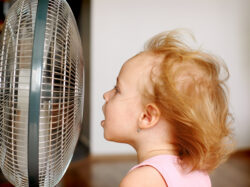 You set the thermostat to a comfortable temperature, the main floor feels fine, and then you head upstairs only to find that the bedrooms feel noticeably warmer. If this sounds familiar, you’re not alone. Temperature differences between floors are common in multi-story homes, especially during hot Colorado summers.
Some difference between the upstairs and downstairs can be normal, but a second floor that stays uncomfortably hot may point to excessive heat gain, insulation concerns, uneven airflow, or a cooling system that isn’t keeping up with the needs of your home.
Understanding what’s causing the problem is the first step toward finding the right solution.
Why Is My Upstairs So Much Hotter?
Upper floors often experience more heat gain than the lower levels of a home. Your second floor sits directly below the roof and attic, and upstairs windows may receive hours of direct sunlight. At the same time, your central air conditioning system has to distribute conditioned air through ductwork to rooms that may be farther from the furnace or air handler.
Several factors can combine to make that temperature difference more noticeable. Rather than assuming your air conditioner needs to be replaced, it helps to look at the home and HVAC system as a whole.
Your Upstairs Is Absorbing More Heat
One of the first places to consider is the area above your second floor. On hot, sunny days, an attic can become extremely warm. If insulation is inadequate, some of that heat can affect the rooms below and increase the amount of cooling those spaces need.
Attic ventilation can also play a role. In our guide to saving money on home cooling bills, we discuss how attic insulation and ventilation can affect summer comfort and cooling demands.
Heat can also enter through upstairs windows. Bedrooms with substantial east-, south-, or west-facing window exposure may receive significant direct sunlight at different times of the day. Closing blinds, curtains, or insulated shades during periods of strong sun can help reduce solar heat gain.
Air leaking around windows and doors can add another source of unwanted outdoor heat. These building-related issues are important to consider because even a properly operating AC system has to compensate for the additional heat entering the home.
Your Ductwork May Not Be Delivering Enough Cool Air Upstairs
Central air conditioning depends on ductwork to distribute conditioned air throughout the house. In some homes, that distribution isn’t perfectly balanced between floors or individual rooms.
Upstairs rooms may have longer duct runs or receive less supply airflow than areas closer to the HVAC equipment. Return-air design can also influence how effectively air circulates back through the system.
As we explain in our article about common summer household problems, unbalanced cooling can sometimes be related to a central duct system that doesn’t provide equal airflow to different parts of the house.
If one bedroom receives strong airflow while another upstairs room barely does, airflow and ductwork are worth evaluating. An HVAC professional can help determine whether the issue is related to the ducts, system operation, or another cause.
Your AC’s Airflow May Be Restricted
Pay attention to whether your upstairs has always been warmer or whether the problem has recently become more noticeable.
A new or worsening temperature difference may indicate that your cooling system isn’t moving as much air as it normally does. A clogged HVAC filter, for example, can restrict airflow. Dirty indoor cooling coils can also reduce the volume of conditioned air reaching the rooms.
Save Home Heat discusses this issue in more detail in our guide to keeping AC cooling coils clean. Restricted airflow can be especially noticeable in upstairs rooms and other areas farther from the HVAC equipment.
Homeowners can start by making sure the system’s filter is clean and that supply and return registers aren’t blocked by furniture, rugs, or other objects. If airflow still seems weak, professional diagnosis may be appropriate.
Your Cooling System May Not Be Properly Sized for Your Home
Another possibility is that the cooling system isn’t well matched to the home’s actual cooling requirements. This doesn’t necessarily mean the air conditioner is simply “too small.”
Correct HVAC sizing involves much more than square footage. Factors such as insulation, windows, ceiling height, air leakage, home orientation, sun exposure, and adjacent attic or garage spaces can all influence cooling demand.
That is why professional contractors use load calculations when determining what size AC system a home needs. A Manual J load calculation provides a more detailed picture of the heating and cooling requirements of the home instead of relying on square footage alone.
If you’re considering new cooling equipment, proper sizing is especially important. Both improperly sized equipment and poor air distribution can contribute to comfort concerns.
Your AC May Be Losing Performance
An upstairs temperature problem by itself doesn’t mean it’s time for a new air conditioner. However, uneven cooling can be one of several signs that an older system needs attention.
Consider whether the hot second floor is happening alongside other changes, such as:
- The AC runs for very long periods without reaching the thermostat setting.
- Cooling bills have increased unexpectedly.
- The system requires increasingly frequent repairs.
- Airflow or cooling performance has noticeably declined.
- Comfort problems have become worse over time.
If several of these problems are occurring together, it may be worth having the system evaluated. Our guide on when to replace an AC unit in Denver covers additional factors homeowners can consider when deciding between repair and replacement.
How Can You Make Your Upstairs Cooler?
The right solution depends on what’s causing the temperature difference. A good place to start is with simple steps that reduce heat gain and support proper airflow.
- Keep window coverings closed during strong sunlight. This is particularly helpful for upstairs rooms with significant sun exposure.
- Check the HVAC filter. A dirty filter can restrict airflow through the system.
- Keep supply and return registers clear. Furniture and other objects shouldn’t interfere with airflow.
- Use ceiling fans appropriately. Fans can improve comfort by moving air across occupants, although they don’t lower the room’s actual temperature.
- Look into attic insulation and ventilation. If significant heat is radiating from the attic into the living space, an insulation or roofing professional can help assess the attic.
If these steps don’t resolve the problem, an HVAC technician can evaluate system airflow, cooling performance, equipment sizing, and other potential causes.
Could Ductless or Variable-Capacity Cooling Help?
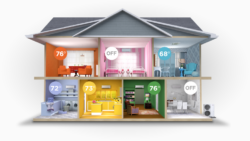 Some homes have persistent comfort differences even when their existing system is operating properly. In those cases, there may be equipment options worth discussing.
A ductless air conditioner or heat pump can provide targeted temperature control for specific spaces, such as upper-level bedrooms that consistently need additional cooling. This can be useful when one portion of the home has very different comfort needs from the rest.
Another option when replacing central equipment is variable-capacity cooling. Rather than simply cycling between full output and off, this type of system can operate for longer periods at lower capacity. As we discuss in our guide to variable-capacity central AC, longer, lower-output operation can help reduce temperature differences between the main floor and upper levels in some homes.
Neither option is automatically the answer to a hot upstairs. The best choice depends on the home’s design, existing system, airflow, cooling load, and the specific rooms experiencing problems.
Get Help With Uneven Cooling in Your Denver-Boulder Home
 If your upstairs stays uncomfortably warm while the rest of your house feels fine, don’t assume you simply need to turn the thermostat lower. The cause may be related to heat gain, attic conditions, airflow, maintenance, ductwork, or the design and performance of your cooling system.
Save Home Heat Company can evaluate your home’s cooling system and help identify what may be contributing to uneven comfort. Our experienced team serves homeowners throughout the Denver-Boulder area with AC maintenance, repair, replacement, ductless cooling, and other home comfort solutions.
Contact Save Home Heat Company to schedule service and get to the bottom of your upstairs cooling problem.